How to Breathe for Better Rest
Author Sleep Cycle
Published
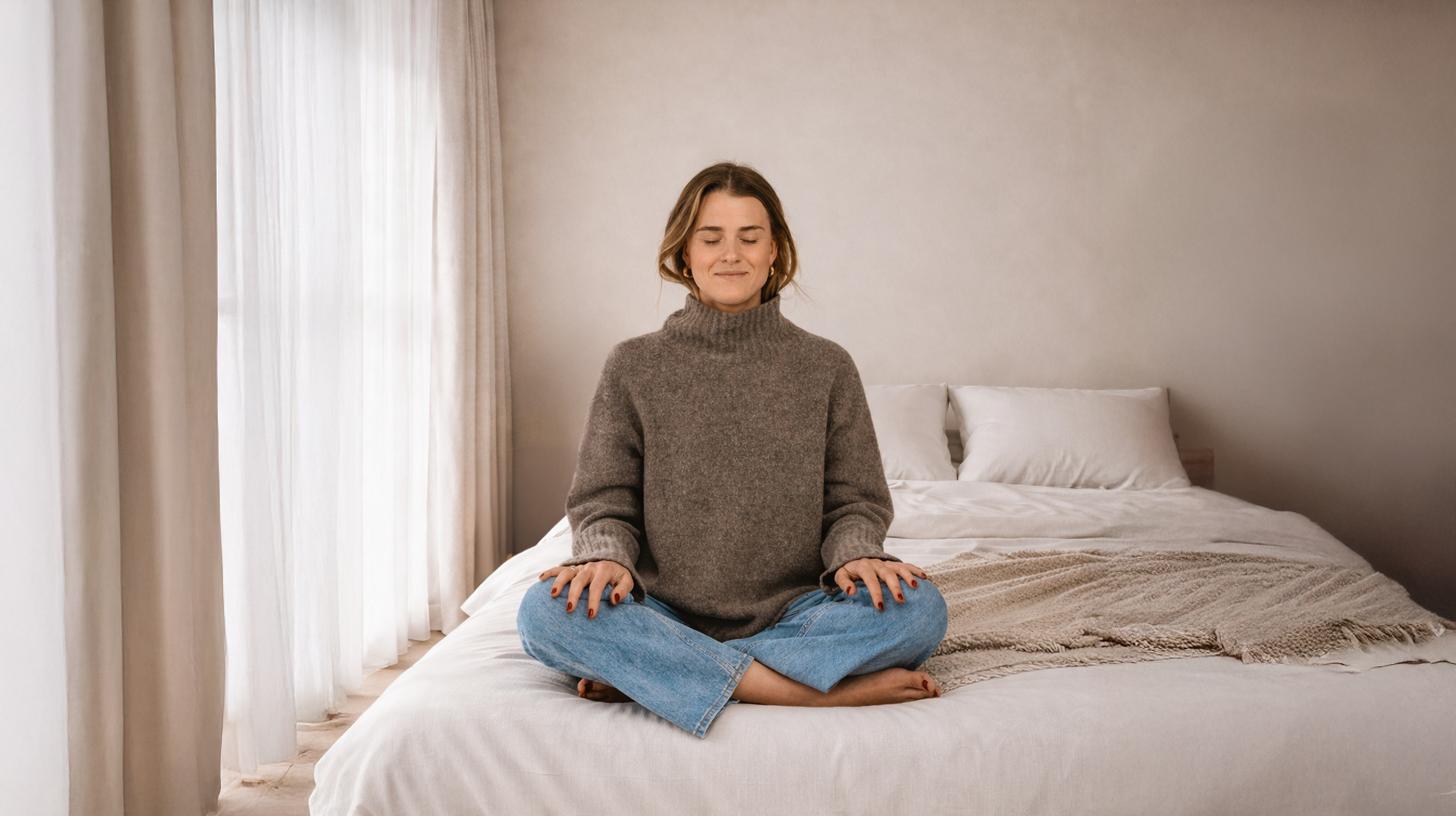
Your breath is an important tool. Whether you want to calm a racing mind or simply get ready for sleep, breathing exercises can help you do it. Elsa Unenge, a certified breathing coach with a background in Behavioral Science and founder of Breath Curriculum, takes you through why breathing affects sleep and some exercises to help you improve your rest.
How Breathing Affects Sleep
Imagine someone in danger and scared for their life. How do they breathe? In and out of their mouth, high up into their chest, and fast. This breathing pattern signals to the brain that the body needs to be activated and ready for fight or flight. It raises adrenaline, heart rate, and blood pressure. It suppresses digestion and downprioritizes recovery and sleep.
Many of us breathe like we’re running from danger every day, which means important functions like sleep aren’t prioritized. When this happens for a long time, we start to see effects on our health.
When a person is safe and calm, they breathe in and out of their nose, with their diaphragm, and slowly. When we breathe like this, the body shifts to a rest and recovery state, and the everyday functions that maintain our health are no longer pushed aside.
Our brains are constantly listening to how we breathe to try to read whether we’re safe or not. By practicing and becoming better at breathing in a calm way, we signal to our brain that we’re safe. It increases parasympathetic activity, which is responsible for rest, digest, and recharge. That means that everyday functions, like sleep, can run efficiently to keep us healthy.
Fall Asleep Easier
If you’re struggling to fall asleep, breathing exercises can help. You may be having trouble falling asleep because you can’t stop thinking, are worried about falling asleep, or don’t feel tired enough. Breathing can help you calm your nervous system to reduce worried thoughts.
One simple technique to try is making your exhales longer than your inhales. For example, when you inhale, you can count to four quietly in your head, and when you exhale, you can count to six or even eight.
Do this until you start to feel relaxed and a little more sleepy, then let yourself drift off.
This phenomenon is called respiratory sinus arrhythmia. Every time you inhale, your heart tends to speed up slightly, and every time you exhale, it tends to slow down. By making your exhales longer than your inhales, you spend more time slowing down your heart, telling your brain that you’re safe.
Make sure to always breathe in and out of your nose and into your belly, as mouth and chest breathing signals stress to your brain.
Fall Back Asleep
If you wake up in the middle of the night, breathing can help guide you back to sleep. This is where finding a breathing technique you like comes in handy, as the more you’ve practiced different techniques, the better you know what works for you.
If you don’t have a familiar technique to reach for, you can use the shorter inhales and longer exhales to scan your body from head to toe.
On each inhale, imagine breathing air into a specific part of your body, and on each exhale, imagine the air leaving as you let that part relax. If your mind wanders, come back to where you were. It’s physically easier to release your muscles as you breathe out, making it easier to relax each body part as you exhale.
This practice combines three well-established relaxation techniques that help your mind and body shift into sleep. First, the long exhales support a lower heart rate and more parasympathetic activity. Second, the visualization keeps your mind occupied, so it is less likely to drift to other thoughts. Third, the body scan helps your muscles release any tension left from the day. Together, they help lull your body into sleep mode.
Elsa takes you through this technique in our Sleep Aid sound ‘Fall Back to Sleep’. Download the Sleep Cycle app to try it tonight.
Daytime Breathing for Sleep
Many people who come to Elsa for breath coaching to improve their performance are surprised to notice that they’ve also helped their sleep. The better you breathe during the day, the more you improve your sleep. Breathing is an effective tool for sleep because it works on what’s happening in your body, not just in your mind.
If you want to make your everyday breathing more efficient, here are three things you can do: breathe through your nose as much as possible, learn proper diaphragmatic breathing (not just belly breathing, even though that can be very relaxing), and get more comfortable with the feeling of air hunger as CO2 rises in your blood. These are three important steps toward breathing healthily and more efficiently.
The more you practice breathing techniques, even when you’re not about to fall asleep, the better you become at them and the more helpful they’ll be. You’ll also figure out which ones you like and which you don’t. If you don’t practice, you might end up reaching for a technique you don’t even like right before sleep. Practice first, so that by bedtime the breath is already familiar.
If you have any questions on where to start, reach out to Elsa at [email protected].

Sleep Cycle
Sleep Cycle experts, trusted partners and AI